A single gram of garden soil can contain over 10 billion bacteria, including endospores that survive hours of boiling. Yet a properly operated autoclave eliminates that entire population in under 15 minutes. This level of lethality rests on three coordinated destructive events, not just one.
Moist heat sterilization attacks microbial cells simultaneously through protein denaturation, nucleic acid damage, and membrane disruption. No single mechanism works in isolation; instead, they amplify one another. Steam transfers heat far more efficiently than dry air—moist steam at 121°C delivers 20 times more thermal energy per gram of water than dry air at the same temperature, a fact that makes autoclave sterilization dramatically faster than dry-heat alternatives.
Steam at 121°C (15 psi) irreversibly coagulates essential enzymes, fragments DNA, and ruptures the cell envelope within minutes. The following mechanisms break down how each layer of microbial integrity collapses under high-pressure saturated steam.
Proteins sustain life by maintaining precise three-dimensional shapes. Even a slight misfolding can halt metabolism. Autoclave temperatures force proteins past their thermal tolerance, causing irreversible aggregation.
The process begins when steam penetrates the cell wall and saturates the cytoplasm. Hydrogen bonds that stabilize alpha-helices and beta-sheets absorb thermal energy and break. Hydrophobic cores, normally buried inside folded proteins, become exposed to water, triggering catastrophic collapse. Disulfide bridges, the covalent cross-links that reinforce many structural proteins, can also scramble at elevated temperatures, cementing the denatured state.
Once an enzyme like DNA polymerase or ATP synthase loses its native conformation, the cell cannot perform energy generation, replication, or repair. Even if other components remain intact, loss of a single essential enzyme cascade ensures death. This is why moist heat is so effective: water molecules actively participate in disrupting the non-covalent interactions that maintain protein structure, which dry heat cannot do as rapidly.
While dry heat sterilization requires 160–180°C for two hours, moist heat accomplishes equivalent protein coagulation at 121°C in mere minutes. The presence of water vapor accelerates the breaking of hydrogen bonds and hydration of exposed hydrophobic groups, lowering the activation energy for denaturation.
Even if a microorganism survives initial protein damage, it cannot propagate without intact genetic material. Autoclave temperatures directly compromise both DNA and RNA integrity.
At 121°C, DNA undergoes depurination at an accelerated rate—the glycosidic bonds linking adenine and guanine to the sugar-phosphate backbone hydrolyze spontaneously. A single E. coli genome can lose hundreds of purine bases during a standard sterilization cycle. These abasic sites block replication forks and, if present in sufficient numbers, overwhelm the base excision repair machinery. Further, the phosphate ester backbone itself can undergo strand scission under heat and elevated pressure, generating single- and double-strand breaks.
RNA, being single-stranded and less chemically stable than DNA, degrades even faster. Messenger RNA critical for translation depolymerizes rapidly, halting protein synthesis almost immediately. Ribosomal RNA, which forms the catalytic core of ribosomes, loses its functional structure when its hydrogen-bonded domains denature.
The combined effect renders the cell incapable of reproducing, even if some metabolic enzymes briefly remain active. The threshold for lethal DNA damage is surprisingly low: studies indicate that fewer than 10 double-strand breaks per chromosome are sufficient to assure cell death, and autoclave conditions generate far more extensive damage within the first minute of exposure.
Cellular membranes are not static barriers; they are dynamic fluid structures. The phospholipid bilayer exists in a liquid-crystalline state at physiological temperatures, allowing controlled permeability. Exposing a microbial cell to autoclavable temperatures shifts this order abruptly.
When membrane lipids surpass their phase transition temperature, they move from a well-ordered gel phase to a fluid, disordered state. In this disrupted configuration, permeability rises sharply. Ions like potassium and sodium leak across the membrane, collapsing the electrochemical gradients that drive ATP synthesis and nutrient transport. At the same time, membrane-embedded proteins—transporters, sensor kinases, components of the electron transport chain—lose their native conformations, mirroring the denaturation of soluble proteins.
For Gram-negative bacteria, the outer membrane’s lipopolysaccharide layer further destabilizes. The divalent cation bridges that anchor LPS molecules break under heat stress, shedding the protective barrier and exposing the vulnerable inner membrane. The result is a simultaneous loss of energy metabolism and breakdown of the cell’s physical boundary, rendering the organism non-viable.
If vegetative bacteria succumb quickly, endospores represent an entirely different threat. Formed by genera like Bacillus and Clostridium, spores can survive boiling water, UV radiation, and harsh chemicals. Their resistance to autoclaving stems from a specialized multilayered architecture.
The spore core contains DNA, ribosomes, and essential enzymes but maintains an extremely low water content—only 25–50% of the hydration level found in vegetative cells. This dehydration is enforced by the accumulation of calcium dipicolinate (Ca-DPA), which replaces water and solidifies the cytoplasm into a glass-like state. Small acid-soluble proteins (SASPs) coat the DNA, shielding it from strand breaks and depurination. The cortex, a thick layer of modified peptidoglycan, and the multi-layered proteinaceous coat further insulate the core from external heat and chemicals.
To kill spores, autoclave temperatures must first hydrate the core. The moist steam slowly penetrates the coat and cortex, dissolving Ca-DPA and rehydrating the vital matrix. Once the core returns to a hydrated state, the same mechanisms—protein denaturation, DNA damage—proceed as in vegetative cells, but the entire process takes longer. This is why standard sterilization cycles target 121°C for 15–20 minutes, but heavily spore-laden loads may require 134°C for 3–4 minutes in a pre-vacuum cycle, which ensures steam penetration into spore-laden cavities.
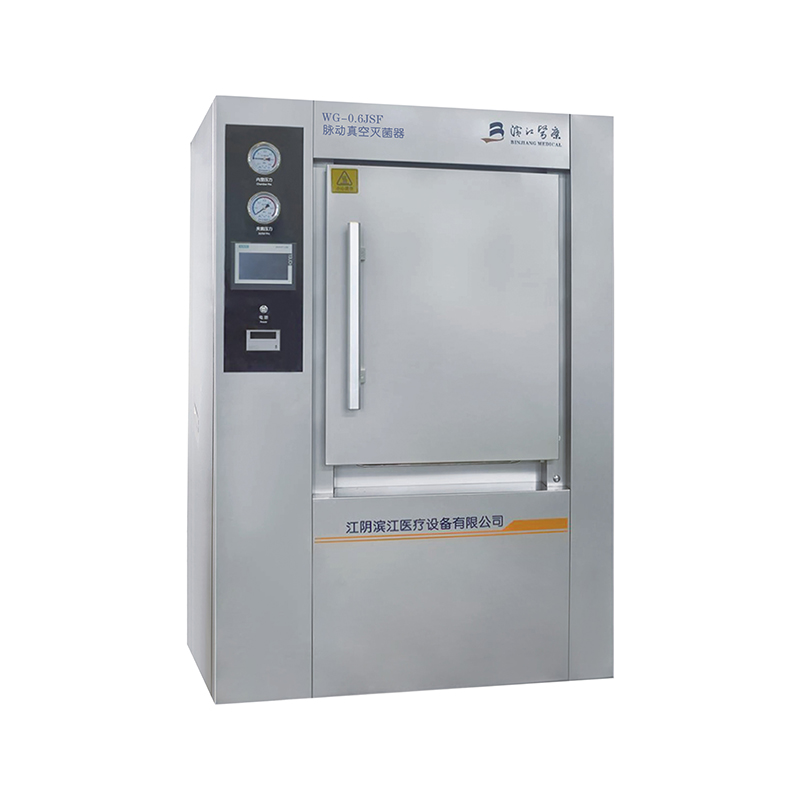
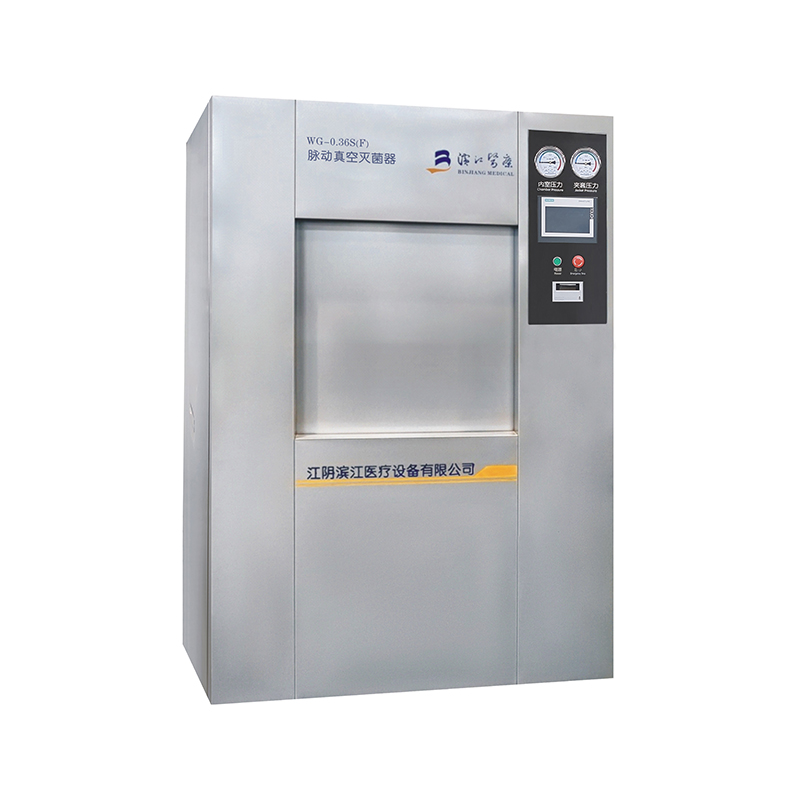
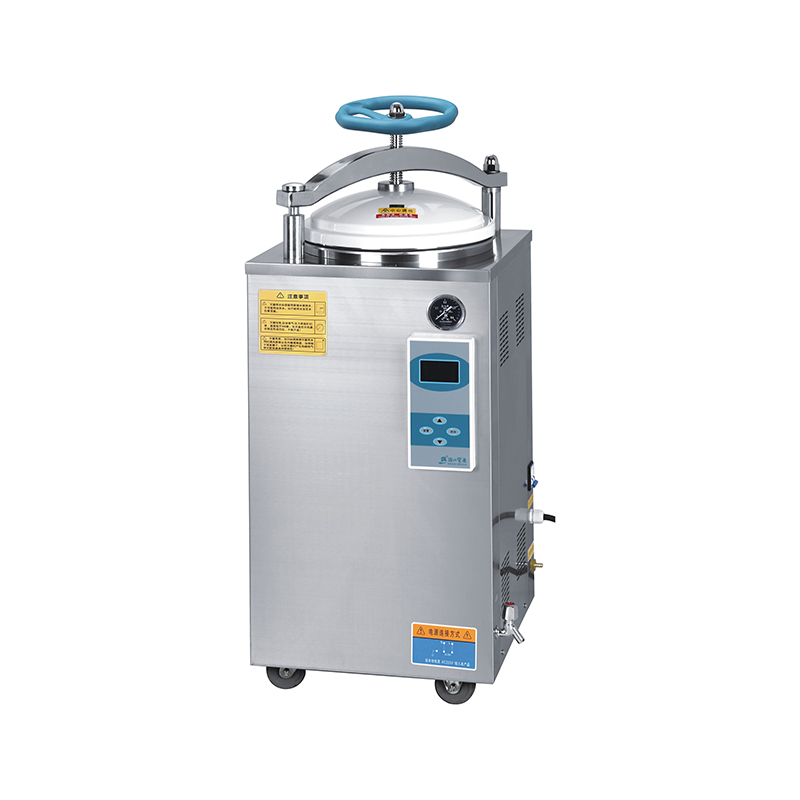
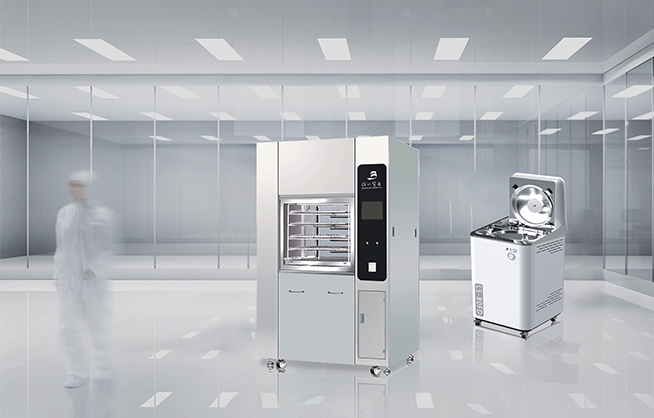
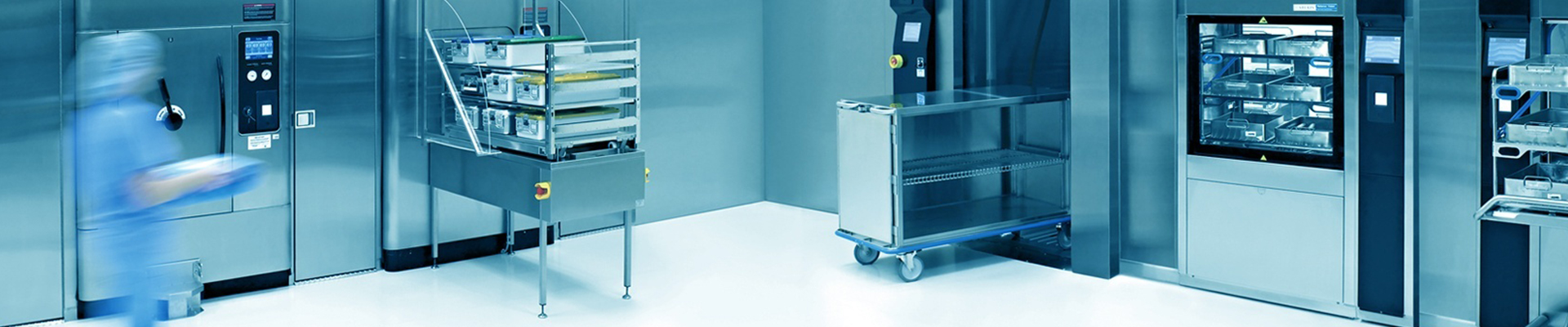
Equipment that employs a pre-vacuum phase, such as the pulse vacuum autoclave, removes air from porous loads and wrapped instruments, allowing steam to surround every spore and drastically reduce sterilization time.
Sterilization is not an instantaneous event but a probabilistic process measured by decimal reduction time. The D-value defines the time, at a given temperature, required to reduce a microbial population by one log (90%). It is the fundamental unit of thermal death kinetics.
Knowing the D-value of a reference organism lets microbiologists design cycles that achieve a Sterility Assurance Level (SAL) of 10-6—less than one chance in a million of a single survivor. For a population of one million spores with a D121 of 1.5 minutes, a 12-log reduction requires 18 minutes of exposure.
The table below lists D-values at 121°C for common microorganisms, illustrating the enormous range in heat resistance.
| Microorganism | D121 (minutes) | Type |
|---|---|---|
| Escherichia coli | 0.03 – 0.1 | Vegetative bacterium |
| Staphylococcus aureus | 0.1 – 0.3 | Vegetative bacterium |
| Candida albicans | 0.2 – 0.5 | Yeast |
| Bacillus subtilis (spores) | 0.5 – 2.0 | Bacterial spore |
| Clostridium sporogenes (spores) | 0.8 – 1.5 | Bacterial spore |
| Geobacillus stearothermophilus (spores) | 1.5 – 3.0 | Thermophilic spore (biological indicator) |
The Z-value complements the D-value by indicating the temperature increase needed to reduce the D-value by one log. For most spore-formers, Z-values range from 8°C to 12°C. This means raising the temperature from 121°C to 131°C can shorten the required exposure time by a factor of 10. Practical cycles leverage this: a 134°C pre-vacuum cycle can sterilize in 3–4 minutes what a 121°C gravity cycle achieves in 15–20 minutes.
Biological indicators (BIs) containing Geobacillus stearothermophilus spores validate that the cycle achieves the targeted SAL. In conjunction with chemical indicators that confirm steam exposure and physical records of time, temperature, and pressure, BIs provide the critical direct evidence that the autoclave’s combination of mechanisms has inactivated the most resistant organism expected.
Even when temperature and time are set correctly, sterilization can fail if the unique characteristics of the load are ignored. Four primary variables determine whether the three lethal mechanisms occur uniformly throughout the chamber.
Steam quality plays a non-negotiable role. Saturated steam must contain minimal non-condensable gases (air) and a dryness fraction near 100%. Superheated steam, where water droplets have evaporated entirely, behaves like hot air and transfers heat poorly. Conversely, wet steam with excessive moisture can impede penetration into porous materials. Both deviations extend the time required to reach kill conditions.
Load geometry introduces hidden challenges. Solid metal instruments heat quickly via conduction; hollow lumens or porous gauze packs, however, trap air that insulates inner surfaces from steam. Gravity-displacement autoclaves rely on steam’s lower density to push air downward, but complex channels often retain air pockets. For such loads, a pre-vacuum cycle that actively removes air before steam injection is mandatory.
Organic residues—blood, tissue, biofilms—act as protective shields. Even a thin protein layer can thermally insulate embedded microbes, effectively reducing the peak temperature they experience. Rigorous cleaning to reduce bioburden before sterilization is therefore not optional; it directly determines whether the sterilization cycle achieves its designed SAL.
The following decision matrix summarizes recommended parameters for common load types.
| Load Type | Temperature (°C) | Exposure Time (min) | Recommended Cycle |
|---|---|---|---|
| Unwrapped solid instruments | 121 – 134 | 3 – 15 | Gravity or pre-vacuum |
| Wrapped instrument packs | 121 | 20 – 30 | Pre-vacuum |
| Hollow lumens / porous loads | 134 | 3 – 4 | Pre-vacuum |
| Liquid media (bottled) | 121 | 15 – 30 | Liquid cycle (slow exhaust) |
| Waste/biohazard bags | 121 – 134 | 30 – 60 | Pre-vacuum with extended post-cycle |
Pre-vacuum cycles are essential for any load that traps air, as the presence of a single air pocket can prevent the autoclave from achieving sterilization conditions in that location. Facilities handling complex surgical kits or laboratory glassware rely on this technology to ensure that steam saturates every surface, triggering the protein denaturation and nucleic acid damage that underpin sterility.
Autoclave sterilization works because it brings to bear three intersecting destructive processes simultaneously: protein denaturation that cripples enzymatic machinery, nucleic acid degradation that blocks reproduction, and membrane disruption that collapses cellular integrity. The presence of saturated steam as the heat transfer medium accelerates these reactions beyond what dry heat can ever achieve, enabling efficacy at temperatures that would otherwise be insufficient.
Understanding these mechanisms matters not merely for academic completeness but for practical reliability. Knowing why a gravity cycle fails for hollow lumens, or how spore resistance stems from core dehydration, directly informs cycle selection and load preparation. When operators recognize the underlying science—the D-value kinetics, the SAL target, the importance of steam quality—they move beyond following recipes to genuinely ensuring patient and laboratory safety.
This mechanistic depth, combined with proper validation using biological indicators and adherence to load-appropriate parameters, is what keeps moist heat sterilization the non-negotiable standard in healthcare, research, and pharmaceutical manufacturing.
+86-510-86270699
Confidențialitate
The information provided on this website is intended for use only in countries and jurisdictions outside of the People's Republic of China.

Confidențialitate